
Four years have passed since Al Araby TV lit up its studios in Lusail, Qatar, ending a seven-year founding phase in London and opening a new chapter under the slogan "Al Araby on Arab Soil." Since then, the new headquarters has tested its ability to keep pace with a rapid succession of disasters, wars, and major political shifts, while simultaneously developing its broadcasting tools and strengthening the channel's presence in the region.
Getting Closer to the Arab Audience
Broadcasting officially began from Lusail on August 30, 2022, as part of a move that included both Al Araby and Al Araby 2 channels, accompanied by a comprehensive overhaul of the studios, presentation formats, and visual identity. The stated goal of the move was to get closer to the Arab audience, ease the movement of press teams, attract talent from the region, and take advantage of Qatar's growing technical and media infrastructure.
A New Birth
Four years on, Mahmoud Omar, Director of the News Sector at Al Araby TV, describes the move as having been "like a new birth" that linked the change of location to an editorial commitment toward viewers. Omar told Al-Modon:
"We made a commitment to viewers to provide coverage closer to their issues and concerns, and we've worked diligently over the past years to fulfill that commitment. The move to Lusail eased our movement and made us better able to convey the clearer picture we've adopted as our motto."
The years following the move were not quiet news-wise; they were packed with events that required live, extended coverage, testing the speed of newsrooms and correspondent networks and their ability to reach the field. Omar recalled a list of milestones the channel has covered, starting with the Syria-Turkey earthquake, then the Libya floods, the Morocco earthquake, the war in Sudan, the war of annihilation in Gaza, the fall of Bashar al-Assad's regime, and the war on Iran.
Omar said the news team handled these events in line with the scale of each story and the viewer's need for information, considering that this string of coverage "cemented Al Araby TV's reputation as a comprehensive and trustworthy news channel." This framing places the relocation in its practical context: proximity to the region is no longer just a spatial slogan, but a daily capacity to manage coverage, communicate with correspondents, and follow round-the-clock events.
Correspondents as a Central Element
The role of correspondents stood out in the news director's remarks as a central element of the experience. He explained that Al Araby TV's correspondent network is continuously expanding, expressing pride in the teams that worked under complex field conditions, and who were "up to the level of the event, a byword for reliability and access at decisive moments." As the scope of events widened, coordination between headquarters and field offices became an essential part of the channel's ability to deliver the news from its location, then support it with context and analysis from the studio.
Alongside this editorial transformation came investment in technical infrastructure: the Lusail headquarters opened with three studios and equipment enabling 360-degree filming, smart cameras, transparent digital screens, and graphics and virtual-reality systems, within an infrastructure built to facilitate the integration of television and digital content. For Omar, the technical and engineering teams work continuously to keep pace with developments and adapt new tools, aiming to present the news as "an integrated experience.
The Team's Move
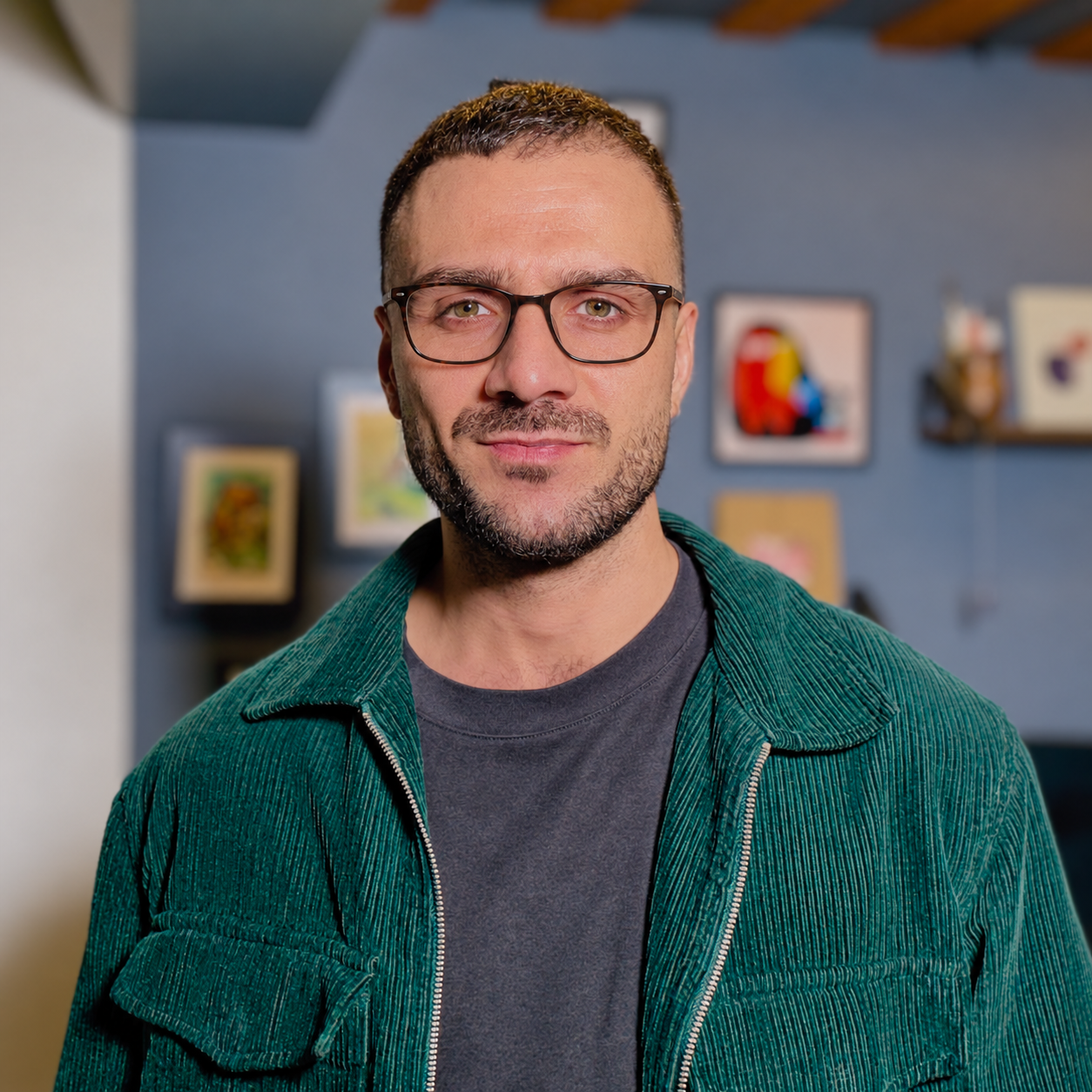
Behind this equipment lay a relocation experience lived by employees and their families. Ehab Al-Maghrabi, Director of IT and Cybersecurity, was among those who moved from London to Lusail. He told Al-Modon that the decision wasn't easy, especially since relocating his family from one city to another was one of the biggest changes in his life, requiring time and patience to adapt and settle.
The decision also came with professional questions. Before the move, Al-Maghrabi wondered about his ability to adapt to a new work culture and build relationships with new colleagues, but the experience he'd gained in London gave him the confidence to take on the challenge, and having the right team and management helped him overcome the difficulties. His account shows that the relocation process didn't stop at moving equipment and staff — it also involved rebuilding the rhythm of work and professional relationships at a new headquarters.
Al-Maghrabi sums up the difference between the two phases by saying that in London he took part in building operations from scratch, while in Lusail he arrived at offices and studios that were still under construction and needed final touches and necessary adjustments to ensure operational continuity. Understanding and mastering the new systems took some time before the headquarters became a familiar work environment capable of handling the pressure of fast-moving news.
As for the moment that best sums up the four years for him, it was the shift to the alternative disaster-recovery site, continuing broadcasting smoothly amid the region's wartime conditions. The backup site is a redundant infrastructure that allows work to continue when the main headquarters or its systems face risks or failures. Al-Maghrabi considered that experience to embody "resilience in the face of pressure," and to demonstrate the value of prior technical preparedness.
Cybersecurity
The challenge of maintaining continuous broadcasting coincided with attempted cyberattacks targeting the channel, according to Al-Maghrabi, though his team managed to fend them off. He added: "Every time, we came out stronger than before."
This experience gives cybersecurity a fundamental place in modern television work, where protecting the broadcast, journalistic material, and institutional data is no longer a background task but a condition for news continuing to reach the public.
Awards
The results of the investment in content and technology showed up in the awards the network received. In 2025, it won 17 awards at the international Telly Awards for work spanning documentaries, promos, virtual reality, 3D graphics, and platform-specific content, and added nine more awards in the 2026 cycle for documentary, investigative, drama, and educational productions — a sign of the network's expanding production scope.
After four years, the newsroom's narrative and the employee's experience converge on one meaning: that the relocation was a continuous process of building, adapting, and testing. On one hand, the channel's presence in Lusail provided a space closer to Arab events and a correspondent network expanding with every phase. On the other, it created a technical infrastructure tested under the pressure of wars and cyber risks, and proven capable of protecting broadcast continuity.
For Al-Maghrabi, the experience settled the questions that accompanied him at the start; he said he feels no regret about moving to Lusail, since the decision tested him on both a personal and professional level and helped shape him into someone stronger and more experienced.
Between the "new birth" that Mahmoud Omar speaks of and the "resilience" that Ehab Al-Maghrabi recalls, the four years trace the features of a phase in which Al Araby TV consolidated its presence from Arab soil, maintaining its commitment to staying close to the news and to its audience.