Ryan Murphy continues to turn crime into a visual spectacle that inspires wonder, horror and revulsion in equal measure. In Monster, the anthology he created with writer and producer Ian Brennan, which premiered on Netflix in 2022, we are captivated by the beauty of a scene whose events are almost unbearable to watch. We feel compassion for a character even after witnessing the enormity of their crimes. Our own responses become part of the questions the series asks.
Across its self-contained seasons, the series revisits real murder cases that gripped American society. With so many of the facts already familiar, suspense extends to the path that led to them: how did this person become capable of killing? Yet the attempt to understand can also implicate us. We find ourselves hoping for a character’s deliverance, only to realise that the series has made revenge appear to be the sole means of achieving it.
This dilemma comes into focus in the fourth season, The Lizzie Borden Story, streaming since 17 September 2026. Ella Beatty plays Lizzie, accused of murdering her father, Andrew (Charlie Hunnam), and her stepmother, Abby (Rebecca Hall), in Massachusetts in 1892. She was acquitted at her trial in 1893. The series, however, depicts her as a participant in the killings and gives her a history of humiliation that makes her anger intelligible, using fiction to reconstruct what the historical record leaves unresolved.
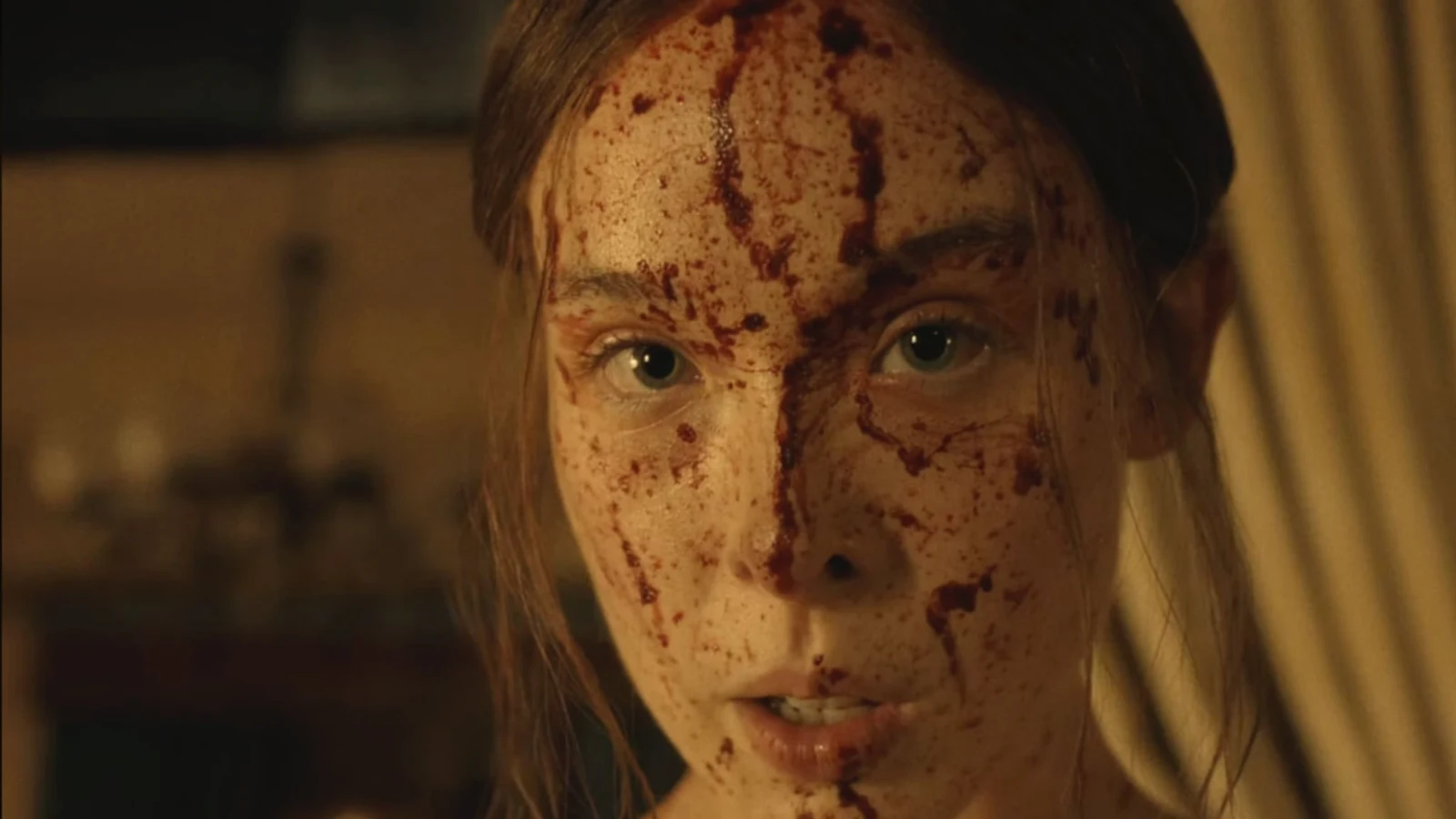
We watch her prepare to meet a prospective suitor as her stepmother instructs her on how to behave, lacing every instruction with insults. Menstruation, and a bloodstain on the sofa, then become further grounds for degradation. A childlike expression lingers in Lizzie’s eyes; her silence suggests an inability to defend herself, while those confronting her seem concerned only with the furniture and the rules of propriety. The humiliation deepens when her stepmother kills her birds and her father refuses to hear her complaint. By the time they are murdered, our anger towards them has given way to relief at their absence.
Yet their repeated, imagined deaths before the actual crime lend revenge a comic quality. Our attention shifts from the horror of death to the next form it will take. Max Winkler, who directed six episodes, has described the season as a “very dark comedy”, drawing its laughter from painful or terrifying subjects. Lizzie’s humiliation is presented in ways that invite us to take her side, while the fantasies of revenge acquire a levity that makes them bearable. Blood becomes more visible and less distressing.
The beauty of the images intensifies this effect. Costumes, décor and elegant interiors expose the gulf between a façade of respectability and what happens behind it. Yet composition and performance can command our attention so completely that the crime itself becomes part of the scene’s pleasure. We respond to the skill with which suffering is portrayed, while our awareness of the person suffering recedes. Aesthetic pleasure coexists with moral rejection, leaving us to ask whether the series restores the victim to our field of vision or merely dazzles us.
The question grows more complicated with Aileen Wuornos (Sarah Paulson), a sex worker convicted of killing six men before her execution in 2002. The assault depicted in the series gives her claim of self-defence an immediate emotional force: we see one woman executed while Lizzie is acquitted. Historically, Wuornos’s account of rape and self-defence was contested in court, and her case involved other killings. But a passing piece of information cannot leave the same impression as a scene we experience alongside her. The comparison between a daughter of an affluent family and a marginalised woman raises questions about class, reputation and the appearance of innocence, without reducing the different verdicts and the evidence behind them to those factors alone.
The boundaries of empathy shift in the first season, The Jeffrey Dahmer Story (2022), starring Evan Peters. It follows a man who murdered seventeen men and boys between 1978 and 1991. Peters gives him a flat voice and an awkward presence that reveal his vulnerability and loneliness; we then see him exercise devastating control over others. His victims were not responsible for his deprivation, and his need for intimacy cannot account for his taking their lives. The longing for love becomes a desire to possess, extinguishing another person’s right to leave. Nor does his homosexuality explain his violence.
The season recovers some balance when it gives Tony Hughes, the deaf young man played by Rodney Burford, a life that precedes his murder. Its portrayal of police inaction also broadens the question of responsibility. Yet Hughes’s mother, Shirley, challenged the accuracy of the depiction and the use of real names. Her objection reminds us that what we consume as a performance concerns, for others, the loss of a person and a representation of him over which they have no control.
The second season, The Lyle and Erik Menendez Story (2024), returns the conflict to the family. Nicholas Alexander Chavez plays Lyle and Cooper Koch plays Erik, who killed their father, José, and mother, Kitty (Javier Bardem and Chloë Sevigny), in 1989. Competing accounts of greed, fear and abuse collide whenever the sons describe what they say they endured behind the doors of their affluent home.
In the fifth episode, written by Brennan and directed by Michael Uppendahl, Erik speaks to his lawyer, Leslie Abramson (Ari Graynor), in an uninterrupted shot lasting almost thirty-three minutes. We know he killed his parents, yet we want to believe his pain and protect him. The episode demonstrates that brutality can be conveyed through a face and a voice without re-enacting every assault. Here, a criterion for judging the depiction of violence emerges: what does seeing it add to our understanding? It may prevent a crime from being sanitised, or it may repeat a point already made. Its necessity depends on what it does for the victim’s presence in the story, rather than simply on the amount of blood shown.
Family subjugation takes another form in the third season, The Ed Gein Story (2025), which examines murder and grave-robbing in Wisconsin. Charlie Hunnam plays Gein and Laurie Metcalf his mother, Augusta. Even after her death, he remains captive to her voice and his need for her approval. His manner of speaking suggests a frightened child who has never escaped her authority. The portrait loses force, however, when it becomes an explanation for everything he does.
Murphy’s question arises here: “Are monsters made, or are they born?” Returning to childhood gives a criminal a history, but diminishes that history if the family becomes a sufficient explanation for murder. The series knows the ending and selects the past that will explain it. Humiliation begins to look like an inevitable prelude to killing, while the possibility of escaping that trajectory slips from view. Childhood abuse can have lasting consequences, but there is no single cause of serial murder, and mental illness is not synonymous with violence. The series remains valuable in its scrutiny of the humiliation of children, the denial of their grievances and the conditioning of love on obedience. It prompts us to consider the responsibilities of families and protective institutions before tragedy occurs. A child deserves safety even if they never commit a crime.
It is this direction of our sympathies that makes the comparison with Alfred Hitchcock significant. The British filmmaker appears in the Gein season, played by Tom Hollander. In Psycho (1960), Marion Crane (Janet Leigh) arrives at a motel run by Norman Bates (Anthony Perkins). After her murder, we follow him as he sinks the car containing her body. When it stops descending, we wait for it to resume: we are hoping for the successful concealment of a crime against a woman to whom we have become attached. Hitchcock’s direction exposes how our moral judgement and our desires as spectators can pull in different directions.
Murphy and Brennan have more time to cultivate this intimacy, but any interrogation of the audience remains incomplete if it exempts the creators. Brennan says the series “turns the camera on us”, even as it chooses what we see and profits from the fascination with crime that it condemns. Tragedy becomes compelling content, the killer a dazzling character, while the victim is sometimes reduced to the moment of death. Artistic value also rests on how attention is distributed, and on which characters are granted a history and a life.
Have they become the Hitchcocks of our time? They share his ability to direct emotion, although the precision of a scene can give way to the temptation of spectacle. Understanding a killer still cannot erase the horror of the crime.
As for the question “Who is the monster: the killer or the parents?”, it is illuminated by responsibilities that exist alongside one another: who inflicted harm, who failed to protect, and who chose to hurt others? Empathy then becomes the capacity to see the human being without granting absolution.
https://law.justia.com/cases/florida/supreme-court/1994/79484-0.html
https://www.netflix.com/tudum/articles/monster-the-lizzie-borden-story-sarah-paulson