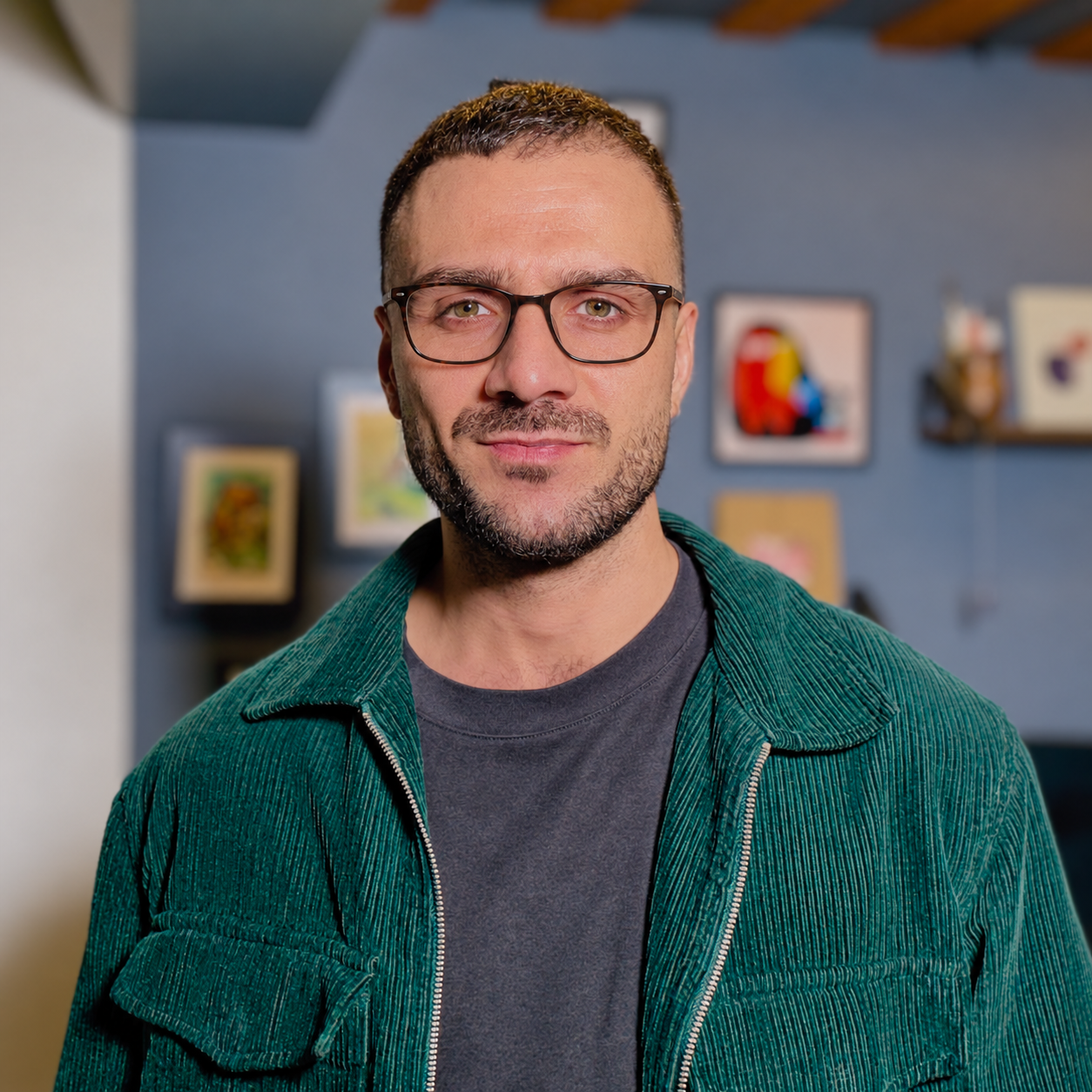
Waha Al-Raheb occupies a particular place in the Syrian cultural scene: actress, director and writer, but also an artist whose professional path intersected with a clear political position that brought her into early confrontation with the Syrian regime.
Al-Raheb belongs to a generation that entered Syrian drama and cinema in the 1980s and built a career spanning more than four decades. Her screen presence began with Mohammad Malas's Dreams of the City in 1984, and continued through television and film works including Jawaher, Al-Qassas, Al-Zayzafoun, Orkidia in 2017, Al-Jabriya: Flight 422 in 2023, and Exit to the Well in 2026.
She also built a distinct path as a director, from Our Grandmothers in 1991 and The Blue Bead in 1994, to Dreamy Visions in 2003, Hawa in 2012 and Declared Killing in 2019. She wrote and adapted drama as well, including The Double Curse, in a career that joined visual sensibility with a sustained engagement with text.
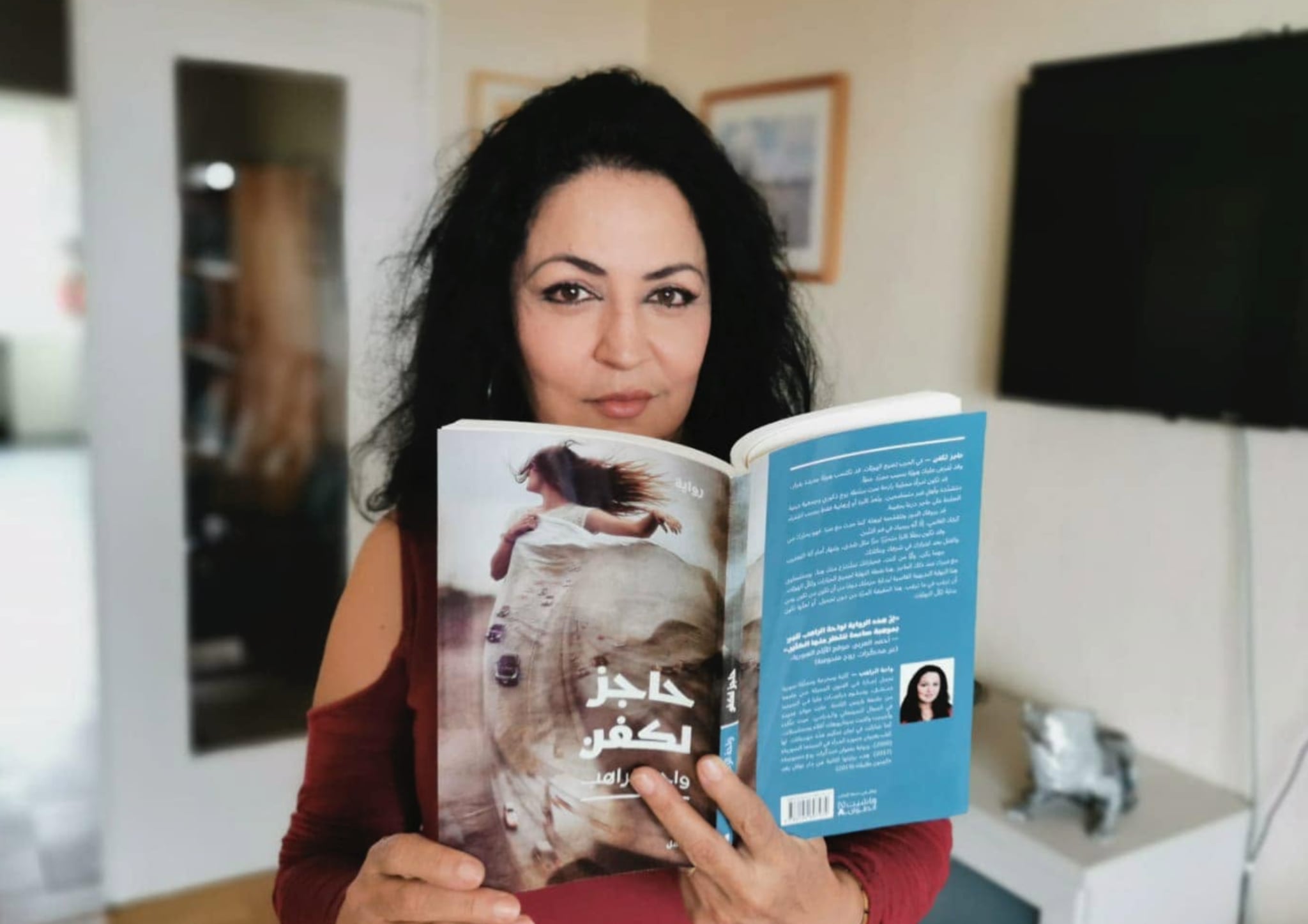
As the pressure on her increased and she was prevented from working inside Syria, she turned to fiction writing, publishing Memoirs of an Unlucky Soul, Madness Unleashed, A Checkpoint for a Shroud and The Salmon's Drowning.
The Beginnings of Image
Al-Raheb studied fine arts in Damascus, but she links her entry into directing and writing to an early moment during her participation in Mohammad Malas's Dreams of the City. Speaking to Al-Modon, she said: “I came close to the world of cinema and saw how the image could become a complete language capable of expressing human beings and life. That pushed me to study cinema in France.”
She added that her first student film won the Silver Award at the Kélibia Festival in Tunisia, which gave her the certainty that she was not an intruder in the profession, despite attempts by people close to her to convince her otherwise.
Novels as a Deferred Project
For Al-Raheb, directing is a space that gathers all her tools: performance, writing, music, drawing, the management of actors and the construction of the cinematic frame. This broad formation explains her relationship to narrative and her movement between fiction and image.
She says her novels were a “deferred project.” The ban that affected her work in drama pushed her to compensate for the image with words, turning postponed ideas into narrative works that could one day become films or series.
The Human Being at the Center
The artistic dimension in Al-Raheb's speech cannot be separated from her understanding of the human being as the center of her whole project. In her novels, she follows the psychological distortions left by violence, fear and authoritarianism in the Syrian experience.
In Memoirs of an Unlucky Soul, she writes about a soul searching for freedom under repression. In Madness Unleashed, she turns a hospital in Douma into a metaphor for the ruin of siege and tyranny. A Checkpoint for a Shroud moves toward the terror of detention and postponed death, while The Salmon's Drowning reads the structure of Syrian violence across decades, where swimming against the current becomes a condition for survival.
Al-Raheb links the formation of her political awareness to the atmosphere after the June 1967 defeat and to the effect that moment left in the home, the street and an entire generation raised on official discourse that claimed victory. She said that the brutal Hama massacre of 1982 deepened her conviction about the nature of the regime and the gap between its slogans and its practices.
She participated in founding the Social Initiative, which worked on women's issues, took part in the Damascus Spring forums, signed statements in 1999 and 2000 and the statement calling for Syrian withdrawal from Lebanon, and joined activities against the American invasion of Iraq. All of this, she said, placed her in open confrontation with the authorities early on.
She recalls that projects were taken from her hands years before the revolution, and that Bahjat Suleiman issued a security circular banning her from work in all state ministries and circulated the ban to producers.
Authoritarianism in Politics and Gender
Al-Raheb does not separate feminist struggle from political struggle. For her, this connection appears inside artistic work itself, in the choice of subjects, the construction of characters and the position of women within the story.
She rejects any treatment that ignores women's role and capacities as a force that makes up half of society, or that presents women as idealized figures detached from their real complexity.
She believes authoritarian rulers leave space for men to dominate women and protect that domination by law, turning social conflict into a struggle between two halves of society instead of allowing both to unite against a common oppressor. She links the victory of any revolution to its ability to address women's issues at their roots.
In this context, Al-Raheb points to the Social Initiative's role in pushing for changes to custody law in women's favor, and to an unprecedented survey on personal status laws that was later published in book form. The authorities then mobilized an inciting religious discourse against the initiative, reaching the level of accusations of unbelief, before dissolving the association arbitrarily.
The Price of a Position
Al-Raheb says that after she announced her support for the revolution and refused to appear in regime media, threats were made against her daughter, then against her personally on social media. Later, she received information confirming that her name was listed in secret security files among those wanted for killing.
She connects the clarity of her position to an inner need to remain consistent with herself. Lying, hypocrisy and the falsification of facts were not things she could tolerate or adapt to, no matter how high the price.
What strengthened that clarity, she said, was her trust in the Syrian people when they rose like a giant in their revolution, breaking the chains of fear. She considers the rupture with the regime part of her Syrian identity, and says that return to the country, which she describes as “the return of the soul,” cannot be complete without stability, safety and justice.
Exile and Writing
For Al-Raheb, exile was an experience that joined loss with freedom. Distance freed her from regime censorship and prohibition, opening a wider space for expression, while also bringing the loss of place, artistic circles and the daily life of a country that remained present in her conscience and writing.
At first, she feared that the spring of her stories would dry up once she was away from Syria. She later discovered that memory, continued attention to events, and the constant preoccupation with people's worries and dreams kept that spring open.
Exile, for her, did not become a drowning in nostalgia or an endless autobiography. It became a distance from which she could reread the Syrian tragedy in a language open to the human being rather than closed around geography. Writing remained the means of preserving connection and preventing absence from turning into rupture.
Freedoms After Assad
Al-Raheb is clear in her position on decisions affecting personal freedoms after the fall of Assad, linking them directly to the essence and values of the revolution. What pleased her in the response to these decisions, she said, was that “our people's voice is still heard,” and that people went out in counter-demonstrations against them.
She reads that response as evidence that Syrians remain attached to the revolution's basic slogans and reject any path that would divide them symbolically or socially once again.
In this context, she places the future of the country within a clear political formula: a democratic citizenship state, law, separation of powers and public freedoms. Any other path, she argues, will lead to the starvation of Syrians, their fragmentation and the weakening of the country.
Drama After Liberation
Al-Raheb gives documentary cinema an advanced position in representing the Syrian tragedy during the years of the revolution, because of its proximity to events and the courage of those who worked in it. Television drama, in her view, has not yet absorbed the scale of what happened, nor the role it can play in preserving national memory.
She criticizes the limits and conditions of funding, pointing out that some feature films did not get their chance because of high costs or because funding bodies interfered in the narrative itself. She mentions that a film about Abdul Baset al-Sarout was not allowed to address the late Fadwa Suleiman.
She also believes that many works previously produced inside Syria lacked credibility because they submitted to the regime's conditions and censorship.
Art as Memory
Her personal project in the coming stage focuses on turning her novels into films or dramatic works, especially The Salmon's Drowning, which she sees as the work most capable of condensing her reading of power, violence and the transformations of the Syrian human being across long decades.
For Al-Raheb, everything returns to the same point: art, in the end, is a means of understanding what happened, preserving it in memory and keeping it open to questioning, rather than leaving it buried under the rubble of politics alone.